Governance and Remuneration
Social, ethics and transformation committee report
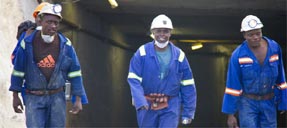 The committee has the primary role of ensuring continuous entrenchment of the Company's transformation initiatives
Dear stakeholder
I am pleased to present the report of the social, ethics and transformation committee for the year ended 30 June 2014.
Introduction
The committee was constituted by the board of directors of the Company in terms of section 72(4) of the Companies Act, 2008 (the Act), read with regulation 43 of the Companies Regulations.
Following its reconstitution and transition from the transformation committee to its current form, the work of the committee was broadened to take into account wider issues, stakeholder responsiveness, good corporate governance and seeks to address business sustainability over and above compliance to the regulatory framework. The committee regularly reviews management's actions in relation to appropriate legislation, King III best practice guidelines, and other industry standards.
In the year 2014, the work of the committee has taken into account the changing socio-political climate, particularly with the outcomes of the national elections in South Africa in May 2014, labour dynamics, the five-month strike in the platinum industry, as well as increased community activism and demands for better social investments and benefits to local communities from mining companies. The events of the past two years have drastically changed the operating environment, and call for radical means of addressing social issues. This is in the midst of a resource-constrained business climate, compounded by lower platinum prices, lower commodity demand, higher costs of production and widening socio-economic disparities, particularly in the African continent.
While the committee carries out its legislative obligations under the Act in relation to the Company and its subsidiaries towards compliance, it also endeavours to interrogate the organisation's policies, practices and responsiveness to these issues in the short, medium and long term taking into account the potential impacts these have on the business and affected stakeholders.
The committee guides, monitors and evaluates the progress by management in this regard and its mandate and responsibilities include oversight in:
- Reviewing the adequacy and effectiveness of the Company's engagement and interaction with its stakeholders
- Reviewing and approving the policy and strategy pertaining to the Company's programme of corporate social investment and sustainable development
- Approving a code of ethics, and ensuring that the Company has processes in place to promote a healthy and ethical working environment for all its stakeholders
- Monitoring changes in the application and interpretation of empowerment charters and codes (namely the Mining Charter and the Broad-Based Black Economic Empowerment Act and Zimbabwe's National Indigenisation and Economic Empowerment Plan)
- Ensuring that risks in these areas of focus have been identified and adequate measures are in place to mitigate such risks
- Ensuring that transformational and social programmes address business sustainability in the medium to long term
- Ensuring that strategic initiatives respond to maintaining the organisation's licence to operate.
The work plan for the committee is updated on a regular basis to ensure that the most pertinent matters affecting the Company and the industry are effectively and timeously addressed.
Composition
The committee consists of four independent non-executive directors, one of whom is the chairman. The CEO is also a member of the committee. A summary of the committee's membership, meetings held and attendance is set out on page 98 of the integrated annual report, under the corporate governance section.
Responsibilities
The committee has an independent role to play and carries out the following duties:
| (a) |
To monitor the Company's activities, having regard to any relevant legislation, other legal requirements or prevailing codes of best practice, in respect of matters relating to: |
| |
- social and economic development
- good corporate citizenship
- the environment, health and public safety, including the impact of the Company's activities and of its products or services
- consumer relationships, including the Company's advertising, public relations and compliance with consumer protection laws
- labour and employment
- Transformation and empowerment as dictated by relevant legislation which cover:
- Ownership
- Employment equity
- Skills development
- Housing and living conditions
- Preferential procurement
- Enterprise development
- Community development.
|
Some of the committee's formal duties have been sub-delegated to other committees of the board. For example, issues relating to labour and employment are discussed and deliberated upon by the remuneration committee, health, safety and environmental issues by the health, safety and environment committee and all matters pertaining to Company risk by the risk committee. However, the board, as a collective, coordinates the different perspectives to ensure effective and responsible leadership in all areas to be overseen by the committee.
These issues are all monitored and reported on a quarterly basis and in accordance to the work plan, and take into account strategy implementation, success and challenges, performance against set targets, risks identification and mitigation and action plans derived from this process.
| (b) |
To report to the stakeholders of the Company at the annual general meeting on matters within its mandate. |
Areas of focus
During the year under review, the committee has overseen and approved the following noteworthy initiatives by management:
- The Social Impact Assessment of the South African operations, which aims to understand and document the socio-economic status of the communities within our areas of operation, will inform the Company's strategic response towards social investment. It also provides a baseline for monitory impacts over a sustained period of time, and taking remedial action where risks become evident. This work was completed in the first half of 2014, for the Rustenburg operations and covered all 29 villages of the Royal Bafokeng Nation. The next phase will be to complete the Freedom Park informal settlement which was put on hold due to the strike. The information will also be used for scenario planning and the development of business strategies informed by the social environment. The details of this study can be found here of the sustainable development report.
- A revised “skills and talent development” plan, which is premised on a strategy to provide the Company with the most appropriate skills in a sustainable and structured manner, over time. Of significance was the implementation of the team mobilisation programmes, which aim to create team cohesion, education on the business of mining and its products, and a shared vision towards business sustainability. This programme was at its infancy when it was impacted by the strike and will be advanced in the coming year.
- A cultural “change management” programme premised on Respect and Care principles, which is underpinned by the Company's shared values and which focuses on respecting one another and caring for the Company, its people and the environment. In advancing this programme a detailed cultural survey was conducted on 10% of the workforce. The findings indicate the need for the organisation to embark on a robust programme that will support and advance a shared vision and value system underpinned by mutual respect, trust and care. Given the current labour issues evidenced by the recent strike, it is imperative for the organisation to redefine its employee value proposition in collaboration with employees, giving birth to a new way of work, communication and interaction. (Refer to here of the sustainable development report for more detail.)
- An expanded “stakeholder engagement” strategy, which has been implemented to respond to the current volatility in the mining sector, especially after the events at Marikana, which have culminated in intense interactions between industry, labour, government and civil society. The strategy has taken into account industry initiatives through the Chamber of Mines as well as the compact signed in the Deputy President's Framework Agreement for a Sustainable Mining Industry. A review of all stakeholder groupings was also conducted in the year under review, and all material stakeholder engagement activities integrated into the reporting cycle of the committee.
- The Employment Equity and Women in Mining progress report was delivered in February 2014. Although there are no explicit targets for women representation in the Mining Charter and no legislation in Zimbabwe, the advancement of women within the mining sector remains a key business imperative. Good progress has been made in the advancement of HDSAs within management, but a critical area of concern remains at the senior level in South Africa and the representation of women across all levels within the organisation. This will remain an area of focus for the committee going forward. (Refer to page 66 of the sustainable development report for more detail.)
- A renewed focus on “enterprise development”, with particular emphasis on the opportunity to introduce more transformed service providers into core business activities and further increase the pool of local service providers, in order to harmonise relations between the Company and local communities.
- The migrant labour system, housing and living conditions and understanding its history and social impact was identified as key in addressing some of the social challenges faced in mining towns. To this end the organisation is contributing to policy debate around migrant labour and is providing input through the Chamber of Mines.
Evaluation of committee performance
An evaluation of the performance of the committee was carried out in March 2012, as part of a rolling two-year cycle. The evaluation report recognised the encouraging progress made by the committee against its agreed work plan, and in compliance with the requirements of various pieces of legislation applicable to its functioning. The next review was due in March 2014 but was impacted by the protracted five-month strike and as such the next review will be conducted in March 2015.
Outlook for 2015
In the coming year the work of the committee will continue to focus on addressing the legislative requirements as stipulated in various Acts, but of significance will be to ensure that the organisation is better positioned to respond to the socio-political and economic challenges in the areas of operation. These will include:
- Advancing transformation in mining communities by leveraging initiatives relating to employment, skills development, local procurement and enterprise development
- Understanding the social fabric in our areas of operation by initiating a similar social impact study at the Marula operations in Limpopo
- Advancing the organisational change management programme for Respect and Care
- Advancing social programmes that accrue benefits to local communities and promote community sustainability
- Ensuring the stakeholder engagement processes are robust and responsive to stakeholder needs.
NDB Orleyn
Chairman of the committee
25 September 2014
 Integrated Annual Report 2014
Menu
