 Mineral resource
 Implats Annual


Our approach to creating value
Statement by chairman of social, ethics and transformation committee
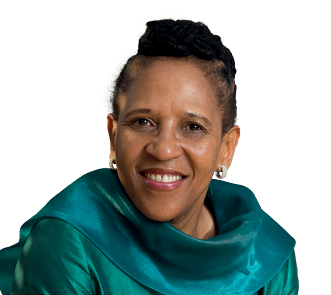
Thandi Orleyn (59)
Social, ethics and transformation committee chairperson
BJuris, BProc, LLB
Delivering societal transformation in the context of turbulence
As chairman of Implats’ Social, Ethics and Transformation (SET) committee, my primary responsibility has been to ensure that the committee delivers on its independent oversight and advisory function regarding Implats’ activities relating to the promotion of social and economic development, good corporate citizenship, the environment, and labour and employment issues.
I believe that our main imperative as a committee is to help the company in its contribution to the transformation agenda of the countries in which it operates. Driving social and economic transformation – using ‘transformation’ in its broadest sense – is an increasingly important business driver, not just in South Africa but across the world. Business is coming under greater scrutiny regarding its social, environmental and human rights performance and the nature of its contribution to meeting the needs and desires of society. This is particularly the case for the mining sector that is facing growing pressure, globally and nationally, to demonstrate greater social returns from its extraction of natural resources.
The events in the platinum sector over the past three years have highlighted both the importance of delivering social value, as well as some of the profound challenges in doing so. We have seen some significant changes in the operating environment and socio-political climate, characterised by challenging labour dynamics, widening socio-economic disparities, and increasingly vocal local communities who have heightened expectations for mining companies to provide meaningful social and economic opportunities. These expectations come amidst a significantly resource-constrained business climate, compounded by lower PGM prices, higher costs of production, continuing regulatory uncertainty and an increasingly wary investment community.
While we remain particularly conscious of the need to deliver on the transformation agenda, the tough market conditions have been constraining our ability to do so at scale. Without the luxury of a cash-flush environment, it is essential that we maximise operational efficiencies and maintain the building blocks for when the economy turns, so that we can drive the transformation agenda over the longer term.
Despite the unavoidable impacts of the tough market environment, there is a strong recognition within the Company that delivering on socio-economic transformation is non-negotiable. As with safety, driving the transformation agenda – within the Company, our neighbouring communities and the country more broadly – is an imperative for all seasons. Promoting social development, acting ethically and investing in transformation are not ‘soft issues’ that we should seek to address when times are good. While their impact on Company performance might be less immediately tangible, ensuring effective delivery on these issues is critical to the long-term performance of the Company. These are issues that we need to constantly ensure are embedded in the organisational DNA, informed by an understanding of their contribution to our collective long-term growth and development.
Reflecting on our achievements and challenges
In my 11 years on the board I have seen some significant developments that I believe Implats can justifiably be proud of in terms of its contribution to the transformation agenda:
- The Company has shown leadership in its delivery of the social commitments encompassed within its social and labour plans, particularly when it comes to the housing and living conditions of employees;
- The equity deal with the Royal Bafokeng was inspired, adding value for all the parties involved and providing a genuine example of broad-based beneficiaries;
- The Group has engaged positively in Zimbabwe, demonstrating its commitment to indigenisation and continuing to make a positive economic contribution to the region despite some challenging operating conditions;
- At a leadership level we have managed to develop and maintain a constructive relationship with the new union representatives from AMCU, and have worked hard to maintain positive relations with the NUM and other union bodies;
- We have seen visible positive changes in the composition of the Company’s management and executive team, as well as significant initial progress in promoting women in mining with almost 10% of our underground workforce being women, up from 1% when I joined the Company; women representation in management has grown steadily to 20% in the current year.
Despite these valuable achievements, there is more that we can do to ensure that the Group remains well positioned to respond effectively and constructively to the socio-political and economic challenges it faces:
- There remains scope for us to further extend our efforts in driving transformation and promoting local socio-economic opportunities through our procurement, skills development and enterprise development activities;
- We should continue our work in understanding and responding to the social fabric in our areas of operation, building on the social impact studies that we have undertaken in some of our communities, and further advancing our social investment initiatives that seek to promote community sustainability;
- We must continue to promote the organisational culture change programme for respect and care;
- There remain opportunities for us to leverage more through our various partnerships, and to work on deepening our relationships with government through more active communication of our activities.
Looking to the future, I foresee some continuing challenges in the operating environment for the mining sector. Some tough decisions will need to be made – by business, government and labour – as we seek collectively to address some of the deep structural challenges facing the sector so that we can maintain its longer-term ability to deliver social value.
In doing so, we need to recognise the significant changes that are happening globally across the mining industry. While I believe firmly that the PGM sector has a strong future, and a continuing capacity to deliver value for stakeholders, we should not have an overly romantic notion of the mining sector’s ability more generally to meet increasing societal expectations. With significant innovations in technology relating to digitisation, transportation and energy generation, and with shifting requirements regarding climate change and the environment, it is important that governments explore and support alternative industries and sectors – including agriculture – as the basis for longer-term economic growth and employment.
Acknowledgements
In closing, I wish to thank my colleagues on the SET committee for their advice and support over the many years that I have had the privilege of chairing this committee. Their experience and perspectives have proved particularly valuable in helping us deliver on our oversight and advisory duties relating to social transformation.
In this sustainability report we outline what Implats has been doing – and what the Company plans to do – to deliver on its strategic commitments relating to its material sustainability focus areas. As one of Implats’ stakeholders I encourage you to share your views with us, both on our performance and on our disclosure.
It is only through informed engagement and dialogue on the socio-economic challenges facing all of us, that we can most effectively identify the opportunities to leverage on the legacy of mining in the region, and to ensure that we remain relevant to the communities in which we operate.
Thandi Orleyn
Chairman of the SET committee