Sustainable development
2014
Menu
 Sustainable development
2014
Menu
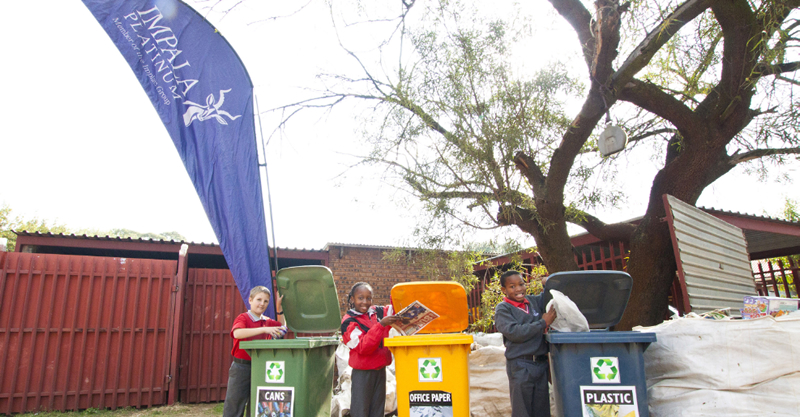
Impala Rustenburg operation is proud to play a fundamental role in ensuring effective waste management in the Royal Bafokeng Nation. An estimated population of around 350 000, the majority of whom fall into the very low income range, generates nearly 60 000 tonnes of waste per annum. With no formal waste collection programme in place to serve the 29 villages scattered over a large geographic area, in 2010 the Royal Bafokeng Administration (RBA) introduced a two-bag collection service, as well as various recycling programmes, to serve all the villages. The initiative, however, proved unsustainable, due to the significant transportation and disposal costs to the nearest municipal landfill site.
Impala Rustenburg operation owns and operates a permitted general waste disposal facility within this general geographic area. This landfill site was developed to allow for full control over the operations' waste management efforts as well as correct and timeous disposal of general operational waste. In 2010, the RBA approached Impala for assistance with their waste collection service. It was agreed that the collected waste from the various villages could be disposed of at the Impala landfill site at no cost to the Bafokeng.
Impala Rustenburg's landfill site has to date accepted, and correctly disposed of, approximately 18 000 tonnes of domestic waste from the surrounding Bafokeng villages. This represents approximately 50% of the total waste volume managed at this site on a yearly basis. Not only has this resulted in a general improvement of the aesthetics of the area, but has directly contributed (both physically and financially) towards the social upliftment of the local community.