
Annual Integrated Report for the year ended 30 June 2024
Annual Integrated Report for the year ended 30 June 2024

PATRICK MORUTLWA, CHIEF OPERATING OFFICER
I am pleased to report that our operations delivered guided production volumes and commendable cost controls during the year, despite navigating several serious headwinds and a constrained operating environment.
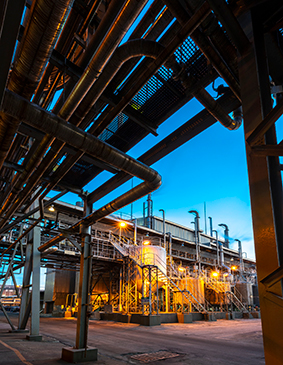
Amid this challenging year, we successfully advanced elevated project activity. Our capital investment programme is focused on life-of-mine extension, increasing beneficiation capacity, ensuring regulatory compliance, strengthening energy security and progressing our decarbonisation journey. Our capital investment programme is focused on life-of-mine extension, increasing beneficiation capacity, ensuring regulatory compliance, strengthening energy security and progressing our decarbonisation journey. These projects, together with disciplined, safe and cost-effective execution, will result in the steady delivery of increased total refined 6E PGM supply from our southern African assets in the year ahead.
Over the past five years, Implats has invested significantly in a series of mine replacement, growth, environmental and processing projects to strengthen the competitiveness of its portfolio. A full review of capital expenditure was undertaken, and where required, investment plans were adjusted to the current reality of weak PGM pricing. As such, the focus during the year was on prioritising the delivery of the growth and replacement projects that enhance Implats’ competitive positioning, securing processing flexibility and reducing the Group’s carbon footprint, utility costs and energy dependency.
The year marked our maiden consolidation of Impala Bafokeng and notable performances at our key mining and processing assets.
Construction on several key capital projects will start in FY2025 to improve operational efficiency and flexibility, including a chrome recovery plant and a tailings retreatment plant at Impala Bafokeng, a ventilation upgrade at Impala Rustenburg’s 14 Shaft, an additional matte ball mill at the base metal refinery, and Phase 2 solar at Zimplats.
For the year ahead, there is an intensified focus on reducing stay-in-business capital across all operating subsidiaries, while preserving operational efficiency through ore reserve positioning, infrastructure integrity and statutory compliance. This, combined with improved capital intensity at Impala Canada, deferring spend on Marula’s Phase 2 project and tapering spend at several growth projects, will result in Group capital expenditure of approximately R9 billion per annum over the medium term.
Mine replacements and upgrades
Zimplats’ development project at Mupani Mine will provide replacement volumes for Rukodzi and Ngwarati mines, on their respective depletion. The project is on schedule to achieve production of 2.2 million tonnes per annum in FY2026, which represents a full replacement of Rukodzi and Ngwarati, with design capacity production of 3.6 million tonnes per annum planned for FY2029. The upgrade to Zimplats’ Bimha Mine, which will partly replace tonnage from Mupfuti Mine on depletion in FY2028, was completed during the year, increasing the mine’s design capacity to 3.1 million from 2.2 million tonnes per annum.
Impala Rustenburg’s R460 million project to refurbish and upgrade the 12 Shaft decline, including trackless and track-bound fleet, was completed in May 2024, and good progress was made on its R220 million project to create four UG2 half levels at 11 Shaft, due for completion during FY2027.
Zimplats’ US$43 million project at the Selous Metallurgical Complex tailings storage facility, to extend the design life from 2025 up to 2049 by expanding the footprint, commenced with Phase 1 (US$25 million) in May 2021, and Phase 2A (US$18 million) in November 2023. Both phases are in progress and forecast to be completed in Q4 FY2026 and Q4 FY2028, respectively.
In response to the lower metal prices, and to preserve cash, execution of Marula’s Phase 2 life-of-mine extension project was slowed. The project is expected to deliver a life-of-mine extension to FY2045.
Beneficiation
By period end, US$387 million was spent on Zimplats’ smelter expansion and SO2 abatement plant, against a total budget of US$544 million. The expanded smelter, incorporating a new 38MW furnace, will be commissioned in H1 FY2025, with the matte produced transported to Impala Refining Services for refining. The SO2 abatement plant is scheduled for completion by June 2028. In total, US$21 million of a budgeted US$190 million was spent on refurbishing the base metal refinery at Selous, with project timelines adjusted and future spending deferred in response to lower metal prices.
The project to debottleneck sections of the base metals refinery at Impala Refineries in Springs is nearing completion with final commissioning expected in H1 FY2025. The project expands beneficiation capacity by circa 10% to provide room for future growth. Phase 3 of the precious metal refinery refurbishment was completed and Phase 4 is scheduled for completion by year-end FY2027.
Impala Rustenburg’s flash dryer project, which doubles the smelter’s flash drying capability and yields environmental benefits, was successfully commissioned during the year.
Decarbonisation
Zimplats completed construction of the first 35MW phase of its 185MW solar power project – the Group’s first large-scale project towards meeting its decarbonisation targets. The 35MW plant was tested and commissioned, with a grid connection scheduled for Q1 FY2025. Zimplats already sources 88% of its electricity from regional hydro-electric facilities and its proportion of renewable energy use will grow as the solar programme comes on stream. Construction of the second phase of the project, a 45MW solar plant, will start in FY2025 and is scheduled for commercial production in FY2026.
Bankable feasibility studies for the construction of a 30MW solar plant at Marula were completed and funding options are being explored. A bankable feasibility study for the construction of a 140MW solar plant at the Rustenburg operations was completed. To further strengthen the security of electricity supply in South Africa, while reducing greenhouse gas emissions (GHG) and long-term input costs, Implats is also assessing several renewable energy solutions for its South African operations.
Growth
Together with JV partner, African Rainbow Minerals, Implats developed a new Merensky mine and concentrator at Two Rivers, with a planned annual output of 180 000 6E in concentrate. Given current market conditions and ongoing challenges faced by the asset’s UG2 operations, the JV partners agreed to put the project on care and maintenance, with plans to re-evaluate a production ramp-up when market conditions improve. The processing plant will be completed and commissioned in Q1 FY2025, before operations are halted.
This year marked our maiden annual consolidation of Impala Bafokeng, which benefited the Group’s achieved volumes. However, notable performances were achieved on a like-for-like basis (excluding Impala Bafokeng’s contribution) at our key mining and processing assets.
Excellent performances were delivered at Zimplats and Impala Rustenburg, and production from our managed operations increased by 21% and was 3% higher on a like-for-like basis. Production from joint ventures increased by 1%, and a decrease in third-party deliveries reflects the impact of two contracts which were concluded in the prior year.
Capacity at our processing operations benefited from a reduction in load curtailment, but was impacted by the scheduled rebuild of the Number 5 furnace at Rustenburg – and our excess in-process inventory increased to 390 000 6E ounces at year-end.
Impala
Impala reaped the benefit of internal interventions, previous investment in asset integrity and operational flexibility and fewer external interruptions, to deliver a strong operational result. Notwithstanding the 11 Shaft tragedy, achieved production in the period reached a three-year high. Total development declined by 11%, in line with planned development rates, while mineable face length declined by 2% to 25.8km due to reductions at the short-life shafts (1, 6 and EF). Structural changes and process enhancements were implemented to support targeted mining flexibility of 1.6 panels per stoping team and a mineable face length of circa 25km.
Tonnes milled were stable at 10.20 million tonnes with strong mining momentum at 12, 14, 16 and 20 shafts offsetting the production impact of safety stoppages at 6, 10 and 11 shafts. Tonnes milled per employee costed increased by 2%. Several interventions, focused on grade control and mining flexibility, yielded improvements, and milled grade also benefited from a reduction in development volumes and increased by 3% to 3.99g/t.
Reduced load curtailment led to an increase in tailings volumes treated as well as plant stability and improved processing yields. Stock-adjusted 6E production was 4% higher at 1.28 million ounces. Production losses associated with the 11 Shaft accident are estimated at circa 50 000 6E ounces. Refined 6E volumes increased by 1% to 1.21 million ounces, with processing capacity constrained during the scheduled rebuild of the Number 5 furnace.
Impala Refining Services (IRS)
Receipts of 6E matte and concentrates from managed operations at Zimplats and Marula increased by 4% to 869 900 ounces, as higher production at Zimplats offset lower deliveries from Marula. 6E receipts from JVs, Two Rivers and Mimosa, increased by 2% to 545 000 6E ounces. Third-party 6E receipts decreased by 34% to 190 800 ounces due to the conclusion of two contracts in the prior comparable period. In aggregate, gross 6E receipts were 3% lower at 1.61 million ounces.
Despite the Number 5 furnace rebuild in the period, refined 6E volumes increased by 3% to 1.49 million ounces as available processing capacity benefited from the reduced severity and intensity of load curtailment.
Impala Bafokeng
The period under review marks the first full year Implats has controlled and fully owned the RBPlat assets, now known as Impala Bafokeng. Performance during the period lagged expectations, with operating momentum at Styldrift negatively impacted by limited mining flexibility, poor fleet availability and a lengthy safety stoppage following a fatal accident in H1 FY2024. BRPM performed well, but production was impeded by sporadic illegal industrial action.
The interventions implemented to improve plant availabilities and lift recoveries at the concentrators yielded notable gains during the year, negating the need for toll milling. Studies for future tailing retreatment and chromite recovery projects were initiated. Capital expenditure planning was reviewed and adjusted. The conclusion of the s189 process, announced in May 2024 in response to a weaker PGM pricing environment, will result in the appropriate labour complement for near-term production parameters. Ongoing initiatives to strengthen leadership capability and management routines and embed Implats’ policies and systems were progressed.
At Styldrift, production parameters were reset to match current performance, providing time to establish the operational readiness needed to deliver improved efficiencies and increase production to steady-state levels. Monthly milled throughput of 230 000 tonnes is now targeted for the end of FY2027.
Impala Bafokeng processed 4.24 million tonnes at a milled grade of 4.36g/t yielding 482 600 6E ounces in concentrate – of which, 294 400 6E ounces were from BRPM and 188 200 6E ounces from Styldrift.
Zimplats
Zimplats delivered another strong performance, benefiting from higher installed milling capacity and cost-containment initiatives implemented in the period. Project activity remained elevated, with significant progress achieved on the mine replacement projects, the construction of a new furnace and Phase 1 of the solar plant.
Tonnes mined increased by 5% to 7.9 million tonnes, benefiting from pillar reclamation at Rukodzi Mine and the continued production ramp-up at Mupani Mine, while tonnes milled rose 5% to 7.9 million tonnes with the third concentrator plant in operation for the full period. Milled grade was stable at 3.32g/t and 6E in matte production increased by 6% to 645 900 6E ounces.
Marula
Production at Marula was negatively impacted by lengthy safety stoppages and subsequent audits following a fatal accident in August 2023, as well as constrained mining flexibility due to geological features and a brief period of industrial action relating to employee share ownership trust payments. Operating momentum was stabilised with programmes implemented to strengthen leadership and management routines, and the labour restructuring concluded in July 2024.
Tonnes milled fell by 4% to 1.85 million tonnes reflecting the operational challenges, and grade declined by 3% to 4.28g/t on the higher proportion of development tonnage processed, resulting in a 7% decline in 6E concentrate volumes to 223 300 ounces.
Impala Canada
Impala Canada was repositioned and restructured due to the deterioration in palladium pricing, sustained inflationary pressures and the constrained operating environment. Production is now focused on high-value underground mining blocks and cost, and capital expenditure was re-based to lower the operation’s all-in sustaining cost. Spend on greenfield tailings storage facility capacity was halted and the Lac des Iles life-of-mine was revised to between three and four years at a reduced production rate.
Tonnes mined decreased by 27% to 3.30 million tonnes, in line with the re-based production profile, which incorporates updated cut-off grades and removes lower-margin material. Milled throughput declined by 3% to 3.68 million tonnes as milled volumes were supplemented with surface stockpiles. Milled grade declined by 1% to 2.90g/t due to the treatment of ore stockpiles and 6E production in-concentrate decreased by 4% to 280 600 ounces.
Two Rivers
Two Rivers continued to face a constrained environment on the UG2 footprint – development rates were accelerated to increase mined volumes and mining activities navigated poor geological conditions. The Merensky project progressed in the period, but the decision was taken to place the project on care and maintenance in FY2025, following initial commissioning, to mitigate potential free cash outflows associated with a ramp-up during the prevailing price environment.
Tonnes milled were stable at 3.57 million tonnes as lower mined UG2 volumes were supplemented by batch-milling Merensky feed. Grade of 3.12g/t (FY2023: 3.09g/t) was impacted by the treatment of the lower-grade Merensky stockpiles, which lowered processing yields. 6E concentrate production declined by 1% to 291 400 ounces.
Mimosa
Mimosa operated well, delivering volume gains and strong cost containment, which mitigated persistent local mining inflation and increased power instability in Zimbabwe.
Tonnes milled increased by 6% to 2.89 million tonnes as the optimised plant was stress-tested to evaluate the optimal balance between concentrator recoveries and milling rates. Higher volumes and improved plant stability offset lower milled grade, which declined by 4% to 3.61g/t on dilution caused by poor ground conditions. 6E production in-concentrate increased by 4% to 255 400 ounces as improved concentrator recoveries from the plant optimisation project partially offset the lower grades.
A decision was taken not to progress the North Hill operation in the current pricing environment, which will impact on life-of-mine at Mimosa. Efforts are focused on the current operations to improve efficiencies and options are evaluated to extend its life-of-mine.
Our focus for FY2025 is to improve our safety performance and operating momentum and preserve business sustainability amid the low metals price environment. Key mining and processing assets operated well in FY2024, but some failed to deliver to expectations and a series of interventions are underway at Marula, Two Rivers and Styldrift to ensure they revert to plan and realise their inherent potential during FY2025.
Group production in FY2025 will be supported by sustained operating momentum at Impala Rustenburg, Zimplats and Mimosa. Performance at Two Rivers is expected to stabilise as the Merensky project is placed on care and maintenance and UG2 production is prioritised. At Impala Bafokeng, production at Styldrift will be consolidated at a lower labour complement, while third-party receipts reflect expected volumes from pre-existing contracts. Meanwhile, refined volumes will benefit from the partial release of previously accumulated excess inventory, with Group sales in line with refined and saleable production.
I thank our teams for the grit and determination they demonstrated in overcoming the challenges of the year, and I am excited by the opportunities that lie ahead. Our focus is on ensuring the consistent and safe delivery of our production targets and collaborating constructively with our key stakeholders. We aim to further entrench operational agility and flexibility within our processes and workflows and I am confident we will achieve our objectives and drive the business forward in a sustainable way.
Patrick Morutlwa
Chief operating officer