Annual Integrated Report for the year ended 30 June 2024
Strategy

The Group’s value-focused strategy aims to position the business as a high-value, sustainable, profitable, socially and environmentally responsible, and competitive producer with increasing exposure to low-cost, shallow and mechanisable production over time.

Our potential for differentiation

Sustaining livelihoods and creating a better future

We are committed to sharing value by rewarding our employees and investing in our communities.

Leading-practice sustainability in mining sector

We are committed to superior ESG practices, anchored by a sound environmental performance.

Diverse exposure to favourable ore types and mining methods

Our asset base provides operational exposure to shallow, mechanisable orebodies with a favourable metal mix and increases our portfolio competitiveness.

Market-leading and efficient beneficiation capabilities to capture the full value chain

This remains a core competitive advantage, which will be leveraged for future benefit.

Diverse customer base and leadership position in market development

We sustain and grow value by supporting present and future demand drivers, creating strong customer relationships and aligning production to evolving demand.

Our value-focused strategy

The six focus pillars of our strategy guide and inform the Group’s goals and activities to ensure it achieves its purpose and vision. Progress on these strategic objectives is monitored through specific key performance areas.

The overriding objective of the Group’s strategic journey is to ensure the long-term sustainability of the business and continue the successful operating model of delivering our much-needed products to global clients. The successful continuity of this model ensures ongoing benefits to a variety of stakeholders.

Most platinum group metals (PGMs) are used in traditional industries that are undergoing significant change. Implats’ major customers are in the automobile sector where transport methods are aligning to cleaner energy use, which is rapidly reshaping the future of mobility and energy storage.

Like our peers in PGM production, Implats shares many of the operating challenges of the sector – high input pricing, electricity constraints, competition for water supply, illegal mining, and increasing community demands stemming from unemployment and poor municipal service delivery.

In addition, since the beginning of 2023, there has been a sharp decline in PGM pricing, causing enormous pressure on profitability and cash flow across all Group operations. Many PGM miners are in a marginal or loss-making position.

Without a vigorous response to safeguard the business, this situation is unsustainable. As a result, Implats has implemented a comprehensive operational and expenditure response to mitigate weak PGM pricing and alleviate margin pressure. The Group’s aim is that all operations are positioned to contribute sustainably and profitably through the fluctuations of PGM cycles.

Creating shared value is fundamental to our approach and our commitment to using our resources, people and expertise in a way that makes a positive, sustainable difference to society. We seek to build more equitable and prosperous communities surrounding our mining operations and to create a better future for all our stakeholders.

Group top 10 risks

1

Lower-than-planned PGM basket pricing

2

Deterioration in safety performance

3

Successful execution of the business case articulated when Impala Bafokeng was acquired

4

Maintaining optimal and harmonious labour relations

5

Rising cost and unreliable supply of electricity, resulting in business interruption

6

Currency or exchange rate-induced inflation and instability due to devaluation of the Zimbabwe Gold (ZWG)

7

Maintaining our social licence to operate and good stakeholder relations

8

Failure to comply with legal and regulatory requirements through the value chain

9

Challenged capacity and efficiencies of management layers at South African operations

10

Cyber security

STRATEGIC PILLARS

Sustainable development
 

We aspire to deliver an industry-leading sustainability performance, producing metals that sustain livelihoods through and beyond mining, creating a cleaner and better future for all.


Material risks

Several risks impact our strategic sustainable development objective. Financial capital is crucial for profitable, responsible and long-term production and funds our ability to develop sustainably. It is driven by PGM basket pricing 1, safety-related risks 2, and the cost and availability of electricity 6, all of which affect production, employee relations 4 and our social licence to operate 7.

While cyber security risk 10 could impact the operational and IT systems required to manage some of the risks impacting this strategic objective, mitigation measures relating to regulatory 8 risks supports this strategy.

Failure to implement climate change adaptation measures.


Implications for value creation

Sustainable development creates value by fostering economic growth, preserving environmental resources, promoting social equity, supporting effective risk management and improving long-term financial performance.


Strategic approach

  • Drive sustainable development and ESG performance through our comprehensive ESG framework
  • Our safety strategy focuses on eliminating harm in the workplace
  • Prioritise good employee relations, while progressing the implementation of robust employee health and wellness strategies
  • During the current period of constrained profitability, prioritise delivery against the Group’s social and labour plan commitments over spending on beyond compliance social projects
  • Constructive and beneficial relationships with mine-host communities and sustainable socio-economic development activities remain priorities in line with our social performance strategy
  • Progressively enhance our environmental practices, guided by a robust environmental strategy
  • Leverage our low-carbon transition strategy to guide our decarbonisation efforts
  • Capacitate our business and our communities to better meet the challenges presented by climate change
  • Group water and energy plans focus on securing and maintaining sustainable and responsible supply
  • A strong commitment to regulatory and legislative compliance
  • Constrained free cash flow requires prudent capital allocation to support key Group initiatives.
 

Trade-offs

  • There are no trade-offs associated with safety
  • Socio-economic and environmental investments, and our ability to fulfil social and labour plan commitments, depends on the availability of financial capital, which is adversely impacted by current market conditions, and reliant on production efficiencies and effective cost containment
  • Significant financing and investment in critical skills and key partnerships are required to advance the Group’s decarbonisation and broader sustainability and climate change strategies, which impacts future cash flow and capital allocation
  • High expectations from mine-host communities and labour unions lead to acrimonious competition for procurement opportunities from local business groupings
  • Globally, critical skills shortages are a challenge
  • Implats aims to maintain constructive and beneficial relationships with its mine-host communities and prioritises sustainable socio-economic development to mitigate, where it can, challenging conditions.
  Performance outlook – KPI targets
  Short term – FY2025   Medium term – FY2029
 
  • Zero fatalities
  • LTIFR <3.90pmmhw
  • Maintain ISO 14001:2015 certification
  • No level 4 or 5 environmental incidents
  • Recycle/re-use 55% of total water consumed
  • Progress renewable energy projects and studies
  • Compliance with statutory requirements.
 
  • Zero fatalities
  • Continuous LTIFR improvement on a three-year rolling average
  • Maintain ISO 14001:2015 certification
  • No level 4 or 5 environmental incidents
  • Recycle/re-use >60% of total water consumed
  • All new mines to have >30% renewable energy, and each operation with more than five years life-of-mine remaining to have a renewable energy source
  • Compliance with statutory requirements.
  Key actions and dependencies
 
  • Prevent injury and ensure a safe operational culture
  • Implement occupational health and safety initiatives
  • Manage environmental impacts
  • Increase use of recycled/re-used water
  • Advance renewable energy projects and studies
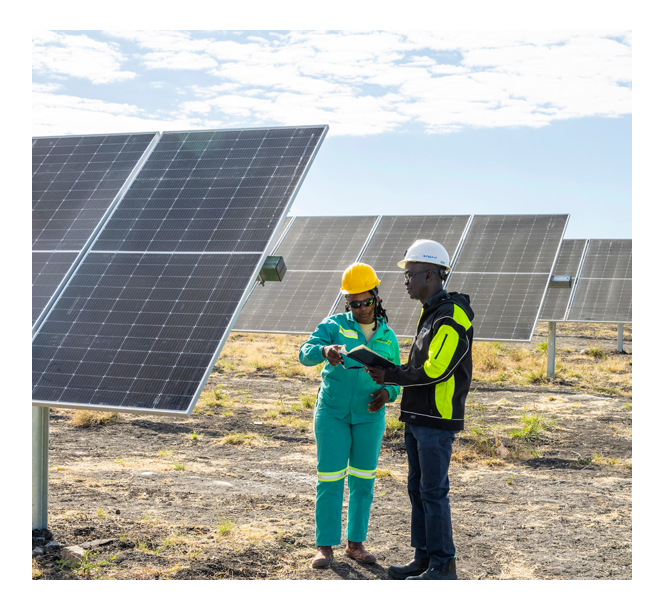
  • Begin construction of 45MW solar plant in Zimplats
  • Explore funding options for 30MW solar project at Marula
  • Assess renewable energy solutions for Impala Bafokeng
  • Promote host community employment and procurement and strengthen stakeholder engagement
  • Comply with statutory requirements, including Mining Charter, SLPs and the empowerment legislation in Zimbabwe.
 
Operational excellence
 

We generate superior value for all stakeholders through modern, safe, responsible, competitive and consistent operational delivery.


Material risks

This strategic pillar prioritises modern, safe, responsible, competitive and consistent operational delivery and is mainly impacted by safety-related risk 2, the successful execution of Impala Bafokeng’s business case 3, a healthy labour relations environment 4 and the cost and availability of electricity 5.

Stakeholder relations 7, regulatory 8 and cyber security 10 risks affect the effectiveness of the measures to mitigate these risks, and have a bearing on successfully delivering operational excellence.

Disruption of key projects at Marula.


Implications for value creation

Operational excellence is a key competitive differentiator, enhancing safe production, increasing operational efficiencies, boosting flexibility, improving employee engagement, strengthening financial performance and supporting effective risk management.


Strategic approach

  • Our commitment to best practice in operational delivery underpins our approach to safe and effective production
  • Our safety strategy focuses on eliminating harm in the workplace
  • The consolidation of Impala Bafokeng into our Western Limb assets will secure and realise compelling strategic, operational and financial value over time, creating a more sustainable business. Impala Bafokeng and Impala Rustenburg are working on various optimisation initiatives
  • Maintain constructive and beneficial relationships with employees and organised labour, while progressing the implementation of robust employee health and wellness strategies
  • Advance green energy solutions to improve energy efficiency and reduce environmental impacts
  • Support mine-to-market margins by increasing third-party processing capacity and supporting the expansion of the Group’s smelting and refining assets
  • Beneficial relationships with mine-host communities and sustainable socio-economic development remain priorities, and the Group continues to deliver to its social and labour plan commitments
  • A strong commitment to regulatory and legislative compliance
  • Equip the Group’s organisational structure to increase knowledge and skills in targeted areas
  • Effective cyber risk management, cyber defence mechanisms and enhanced focus on data privacy risks are in place
  • Responsible and efficient water management, focusing on diversifying and increasing water sources, increasing water re-use and recycling, and reducing freshwater intake
  • Constrained free cash flow requires prudent capital allocation to support key Group initiatives.
 

Trade-offs

  • Achieving cost-efficient production targets supports profitability but may require additional financial capital for increased labour and capital expenditure.
  Performance outlook – KPI targets
  Short term – FY2025   Medium term – FY2029
 
  • 6E Group production 3.50 – 3.70Moz
  • 6E refined 3.45 – 3.65Moz (includes Impala Canada and Impala Bafokeng saleable ounces)
  • Cost per 6E ounce R21 000 – R22 000/oz.
 
  • 6E Group production – 3.20 – 3.40Moz
  • 6E refined 3.10 – 3.30Moz impacted by expected closures at Impala Canada and short-life shafts at Impala (1, 6 and EF)
  • Target below mining inflation increases.
  Key actions and dependencies
 
  • Sustain focus on delivering consistent and safe production
  • Optimise and improve performance at Impala Bafokeng and Marula
  • Operations to deliver in FY2025:
    • Impala Rustenburg 1 250 – 1 300koz 6E stock-adjusted
    • Zimplats 630 – 660koz 6E in matte
    • Impala Bafokeng 490 – 530koz 6E in concentrate
    • Two Rivers 270 – 300koz 6E in concentrate
    • Impala Canada 250 – 270koz 6E in concentrate
    • Mimosa 240 – 260koz 6E in concentrate
    • Marula 230 – 250koz 6E in concentrate
    • IRS (third-party) 150 – 170koz 6E in concentrate.
 
Organisational effectiveness
 

We place people at the centre of our organisation, and engender a shared culture founded on our values to respect, care and deliver.


Material risks

To deliver organisational effectiveness, Implats places people at the centre of the organisation and engenders a shared culture founded on the Group values. This requires that we maintain stable labour relations 4 and monitor and mitigate the impacts of our stakeholder relations 7 and management capacity and efficiency 9 risks to drive organisational effectiveness. This uses financial capital, which is primarily negatively impacted by the risks associated with low PGM basket pricing 1 and our safety performance 2.

Successful integration of Impala Bafokeng into Implats’ operating model 3.


Implications for value creation

Organisational effectiveness supports sustained business success by improving performance, aligning strategic goals, fostering better decision-making, driving innovation, engaging employees, boosting financial performance, supporting effective risk management and strengthening reputation.


Strategic approach

  • Our integrated people strategy, incorporating people management (human resources), social performance, sustainability alignment (ESG) and stakeholder engagement, underpins harmonious labour relations and focuses on ensuring an inclusive, diverse workforce and a safe working environment
  • Implats aligns its business units and employees on the Group’s strategic goals and their achievement
  • Drive the intelligent use of resources to improve production efficiencies and lower operating costs
  • Advance technology, including digital and artificial intelligence interventions, to improve decision-making and create new opportunities for mechanisation and automation to improve safety, efficiencies and internal processes
  • Positive social and economic contributions in host communities, to create thriving, self-sustaining and inclusive mine communities
  • Identify, recruit, develop and retain talent, with a strong focus on core and critical skills, to enable delivery on strategy
  • Constrained free cash flow requires prudent capital allocation to support key Group initiatives.
 

Trade-offs

  • Investing in employee development fosters a motivated and loyal workforce but requires time and financial resources. It is more cost-effective to outsource short-term requirements for specialised skills
  • Multi-year wage agreements with relevant unions secure labour stability in the medium term and provide greater certainty for employees and the Group.
  Performance outlook – KPI targets
  Short term – FY2025   Medium term – FY2029
 
  • Manage labour availability to support operational requirements
  • Sustain leadership capacity and capability
  • Improve representation of women in management positions at operations
  • 15% women in workforce.
 
  • Manage labour availability to support operational requirements
  • Sustain leadership capacity and capability
  • 29% women representation in management by 2026
  • Sustain desired high-performance culture founded on our values.
  Key actions and dependencies
 
  • Strengthen leadership capability and management routines
  • Develop managerial and competency skills and embed a high-performance management system
  • Market and promote Implats as an employer of choice
  • Implement culture leadership programme
  • Conclude wage negotiations at Impala Bafokeng and Impala Refineries.
 
Optimal capital structure
 

We pursue value creation by sustaining and leveraging a strong and flexible balance sheet within a prudent capital allocation framework.


Material risks

This strategic objective is focused on optimally allocating the available financial resources to ensure a strong and flexible balance sheet, while balancing the need for growth, shareholder returns, investment in operational efficiency, and attaining strategic initiatives. It is impacted by PGM basket pricing 1, and the impact of the Zimbabwe Gold (ZWD) 6 and regulatory 8 risks relating to the availability and quality of financial capital.


Implications for value creation

The strategic balance provided by an optimal capital structure supports sustainable growth and profitability by managing the cost of capital, enhancing financial flexibility, improving stability, maximising shareholder value, supporting strategic initiatives, promoting operational efficiency and fostering positive investor relations.


Strategic approach

  • Our capital allocation framework aims to deliver, sustain and grow meaningful value for all stakeholders and provide attractive returns to shareholders while retaining financial flexibility
  • Ensure the Group’s balance sheet is strong, with cash reserves, access to adequate liquidity and funding optionality, to position Implats to enhance shareholder returns and fund sustainable and competitive growth of its asset base
  • Currency and commodity price forecasts consider market fundamentals and global risk factors to more effectively manage future risks associated with financial capital
  • Counteract inherent cost inflation through disciplined cost control
  • Banking facilities are denominated in both rand and dollars at a competitive cost
  • High-level engagement with Zimbabwean government on the implication of the new local currency, the Zimbabwe Gold (ZWG) on Zimbabwean operations.
 

Trade-offs

  • Implats’ capital allocation framework sustains and grows meaningful value for stakeholders and provides attractive returns to shareholders, while retaining financial flexibility for the Group
  • Competing needs for limited financial resources naturally results in trade-offs
  • Deferral of certain capital projects in response to a lower price environment to support balance sheet flexibility.
  Performance outlook – KPI targets
  Short term – FY2025   Medium term – FY2029
 
  • Effective capital structure with appropriate liquidity to fund Group strategy
  • Effective capital allocation strategy
    • Minimum dividends at 30% of free cash flow, pre-growth capital, as defined, with potential to increase based on available cash reserves and free cash flow generation
    • Fund forecast capital expenditure of R8.0 billion to R9.0 billion (excluding any investment in solar projects).
 
  • Effective capital structure with appropriate liquidity to fund Group strategy
  • Effective capital allocation strategy
    • Dividends in line with minimum of policy with potential to increase based on available cash reserves and free cash flow generation
    • Fund forecast capital expenditure of between R8.0 billion to R9.0 billion per annum over five years.
  Key actions and dependencies
 
  • Maintain focus on disciplined cost control and aligning the capital expenditure programme to the prevailing PGM pricing environment
  • Focus on ensuring all operations generate free cash flow
  • Fund projects key to ensuring regulatory compliance and strategic value creation
  • Prioritise shareholder returns, with a dividend policy founded on a minimum allocation of free cash flow generated before growth capital.
 
Competitive asset portfolio
 

We seek to leverage, strengthen and grow our diverse asset base through operational exposure to shallow, mechanisable orebodies.


Material risks

The main risks affecting our ability to leverage, strengthen and grow a competitive asset portfolio relate to the availability of financial resources, which is reduced by low PGM basket pricing 1, our ability to successfully execute on Impala Bafokeng’s business case 3, maintaining constructive labour 4 and stakeholder relations 7, ensuring regulatory compliance 8 and the risk associated with insufficient capacity and effectiveness within management layers 9.


Implications for value creation

Implats’ long-term success and value generation is underpinned by a competitive asset portfolio, which enhances operational efficiency, increases revenue generation, supports strategic growth, diversifies risk, improves financial performance, strengthens competitive advantage, increases flexibility and boosts investor confidence.


Strategic approach

  • Establish a mineral resource portfolio which is both geographically diverse and dominated by low-cost, mechanised orebodies
  • Ongoing development and optimisation of our suite of integrated processing facilities
  • Optimise operational planning and capital investment to enhance the competitive positioning of each asset to maximise returns and reduce vulnerability to PGM cyclicality
  • Consolidating business support processes and overhead structures at the Western Limb assets to improve efficiencies and lower costs.
 

Trade-offs

  • Constrained shareholder returns as value accretive growth and asset optimisation strategies are funded.
  Performance outlook – KPI targets
  Short term – FY2025   Medium term – FY2029
 
  • Ongoing optimisation of portfolio.
 
  • Ongoing optimisation of portfolio.
  Key actions and dependencies
 
  • Ongoing portfolio optimisation prioritising low-cost, mechanised, cash-generative assets
  • Operational costs and capital expenditure alignment to prevailing PGM pricing environment
  • Optimise Impala Bafokeng costs, complete the Styldrift ramp-up and implement initiatives to realise synergies with Impala Rustenburg
  • Address operational challenges at Two Rivers to expedite the ramp-up in UG2 tonnage
  • Improve operational performance at Marula by addressing leadership stability and providing mining flexibility
  • Prioritise high-value ore sources at Impala Canada
  • Successfully complete and commission strategic processing projects.
 
Future focus
 

We sustain and grow value by supporting present and future demand drivers, creating strong customer relationships and aligning our production to evolving demand.


Material risks

Our future focus objectives support future PGM demand drivers, strong customer relationships and our efforts to align production to evolving demand. This requires us to adequately address the risks pertaining to PGM basket pricing 1, our safety performance 2, social licence and stakeholder relations 7, as well as regulatory 8 and cyber security 10 risks.

Failure to implement climate change adaptation measures.


Implications for value creation

The Group’s strategic focus on the future contributes to its success and sustainability by increasing revenue and market share, improving customer satisfaction and loyalty, optimising production efficiencies, boosting profit margins, enhancing competitive advantage, reducing risk, strengthening brand reputation, enabling strategic growth, ensuring efficient resource allocation, and improving strategic planning.


Strategic approach

  • Continuously explore and advance opportunities to leverage new prospects and further enhance business efficiencies
  • Currency and commodity price forecasts consider market fundamentals and global risk factors to more effectively manage future risks associated with financial capital
  • Maintain strong customer relationships and market intelligence
  • Tailor market development activities to support key long-term demand drivers
  • Support for key institutional partners, including the IPA, PGI and WPIC
  • Anticipate and respond to evolving stakeholder needs
  • Monitor and optimally allocate capital, and access early-stage investment opportunities related to future uses of PGMs through Implats’ investment in AP Ventures.
 

Trade-offs

  • Studies and market development strategies and initiatives must be funded.
  Performance outlook – KPI targets
  Short term – FY2025   Medium term – FY2029
 
  • Market development and industry participation to increase demand.
 
  • Maximise market development and industry participation to increase demand.
  Key actions and dependencies
 
  • Continue market development and industry participation to increase PGM demand
  • Continue funding of AP Ventures.